How Zion Canyon Became an American Icon
The Virgin River carved it. Ancient people called it home. Here's how Zion Canyon went from a remote southwest Utah wilderness to a national park.

At first glance the Virgin River looks like any other river.
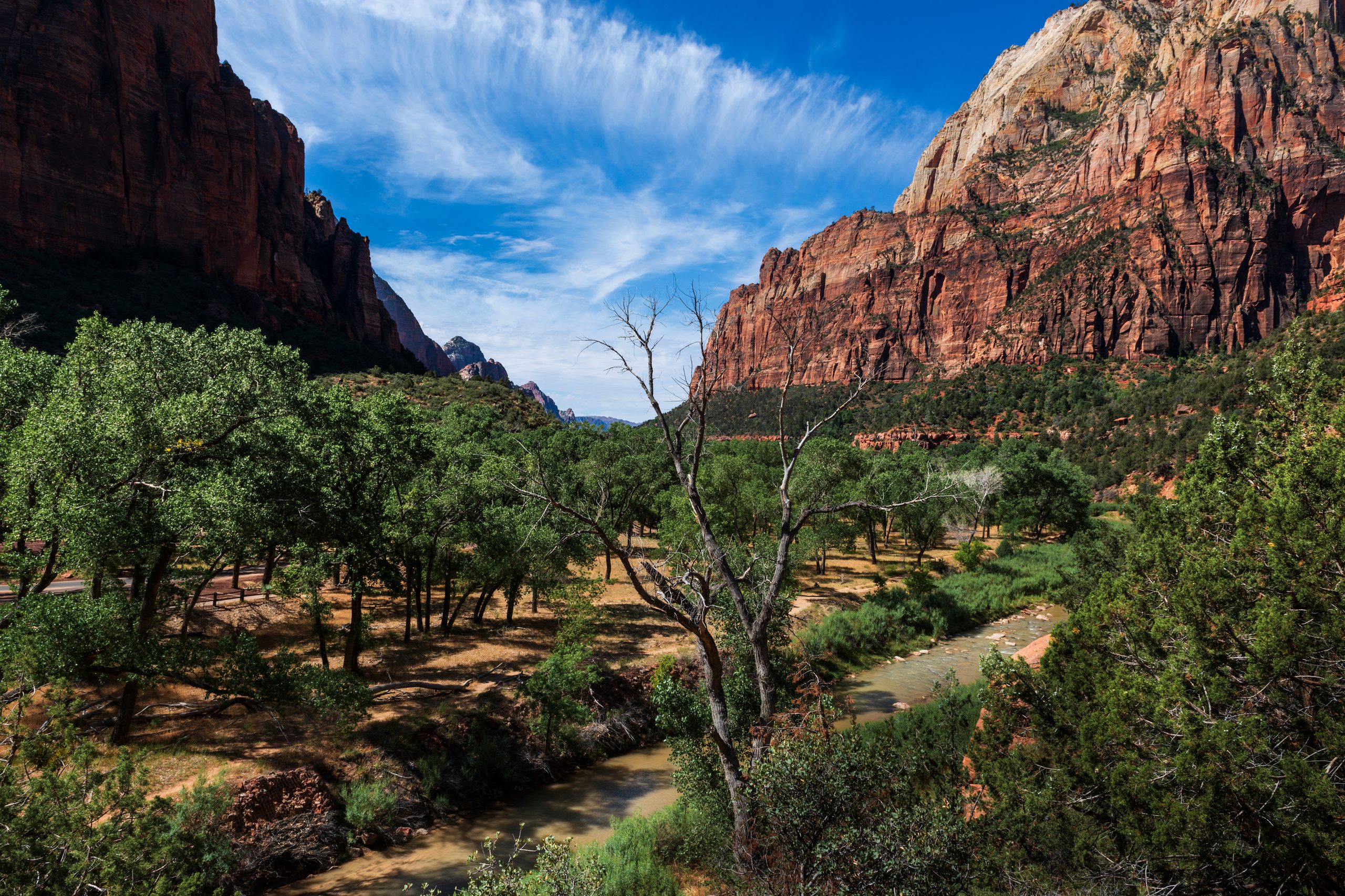
It’s narrow.
Quiet.
On a calm day, you can wade right through it.
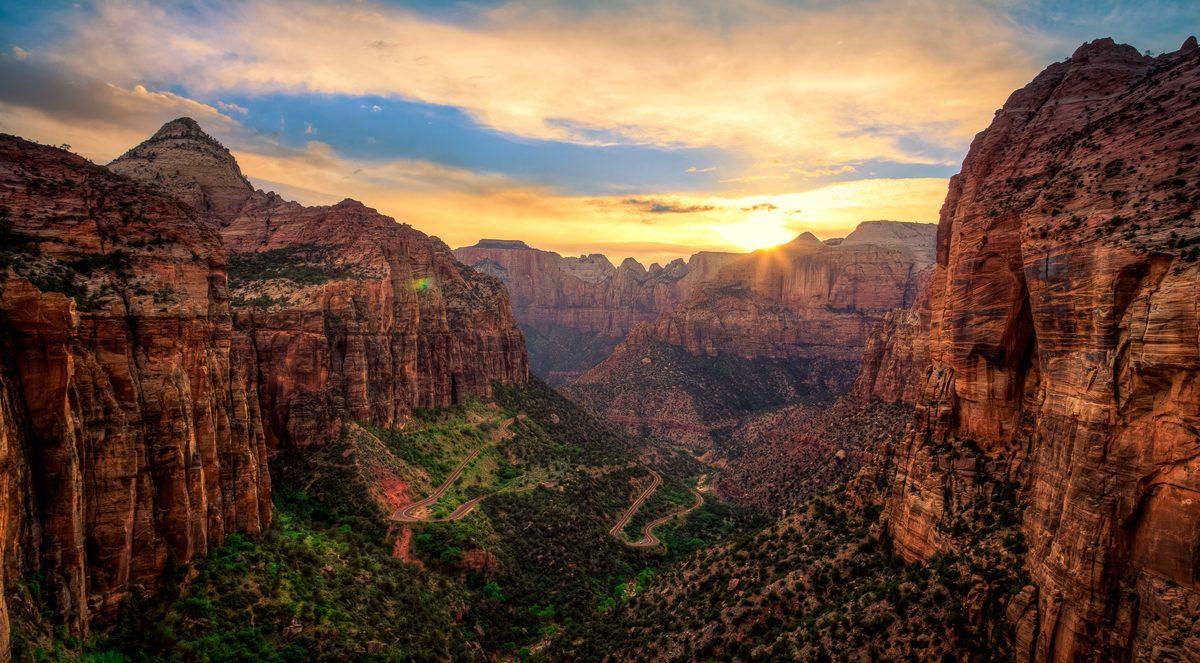
But this small river is the architect of everything you see in Zion Canyon: every wall, every alcove, every towering monolith. Over millions of years, the fast-moving water relentlessly carved Zion National Park’s rich history.
What it built drew ancient people and continues to mesmerize visitors today.
The First People of the Canyon
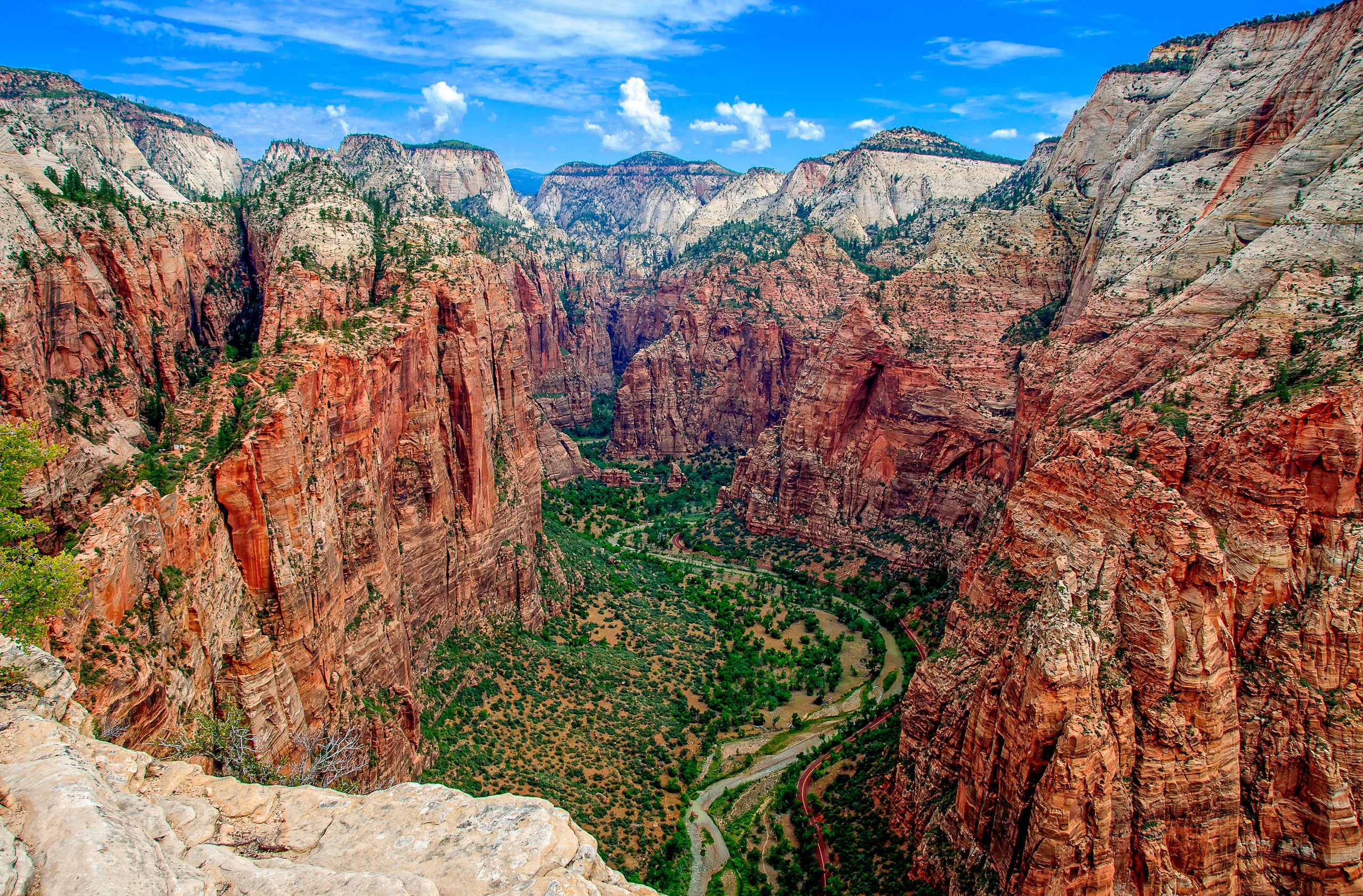
Before shuttle buses carried visitors through the park, people were already living alongside the Virgin River.
Archaeological evidence shows humans moved through this region roughly 7,000 years ago, following water, wildlife, and seasonal changes across the Southwest. Later came the Virgin Branch Puebloans and the Fremont people. They built homes into the canyon walls, grew crops along the narrow valley floor, and left behind pottery, tools, and rock art that still survives on the stone today.
That rock art changes the way you experience the park.
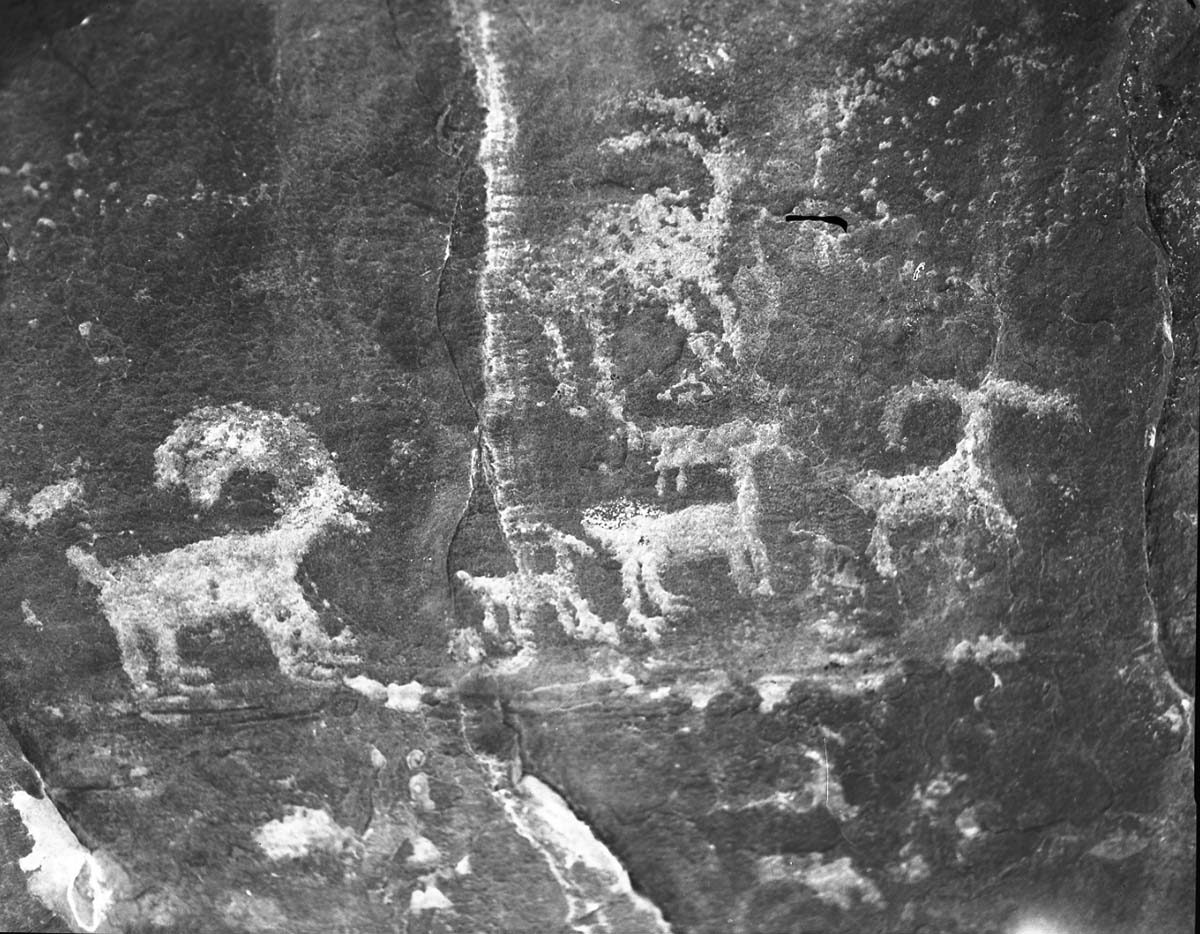
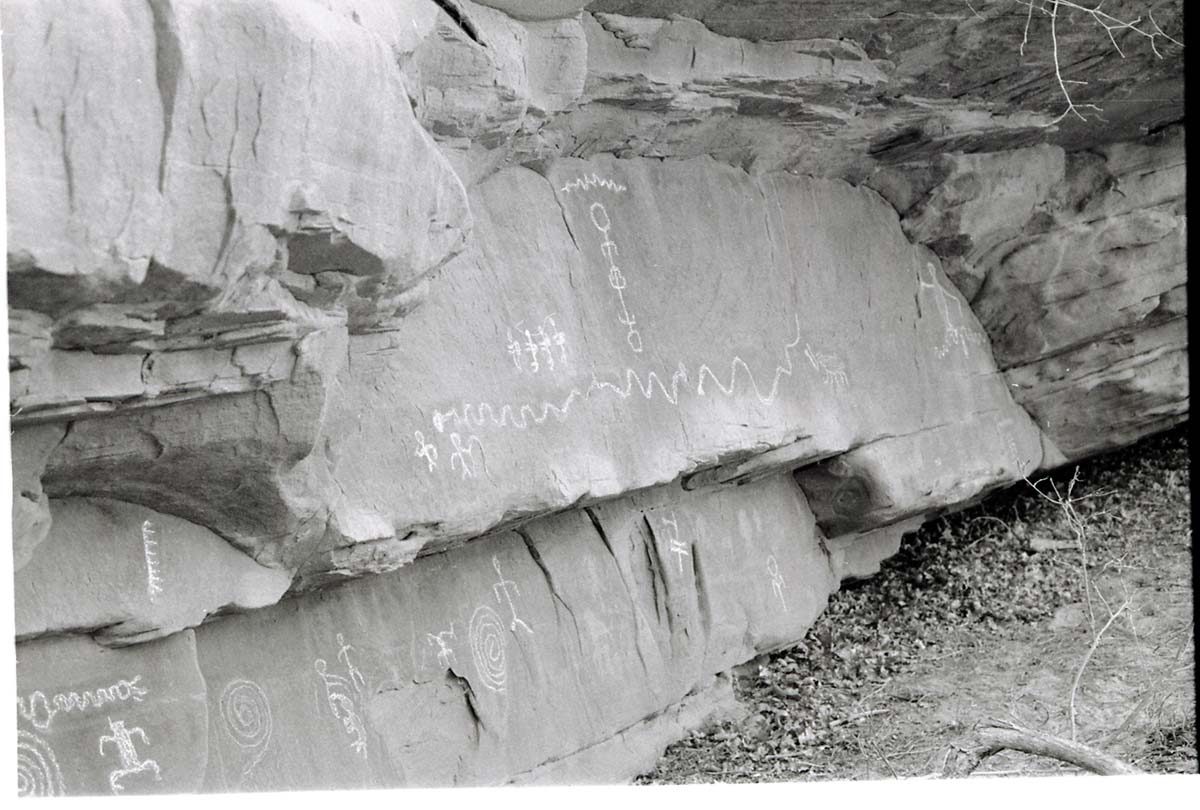
A cliff wall can feel permanent and untouchable right up until the moment a thousand-year-old handprint appears. Suddenly, the distance between past and present disappears. Somebody stood here centuries ago, looking at the same canyon walls.
By around AD 1100, those earlier cultures had moved on, and the Southern Paiute people became the primary inhabitants of the canyon. They called it Mukuntuweap, meaning “straight canyon.” A practical name, earned by people who knew every aspect of this landscape. This wasn’t scenery to them. It was home.
The Path to Becoming a National Park
News of the canyon spread slowly. Explorers came through and took careful notes.
- 1872 – John Wesley Powell surveyed the region while mapping the Colorado River system, recording Mukuntuweap, the canyon’s Paiute name, dutifully in his reports.
- 1903 – Artist Frederick Dellenbaugh spent the summer painting inside the canyon: big, sweeping canvases of those sandstone walls and that impossible sky.
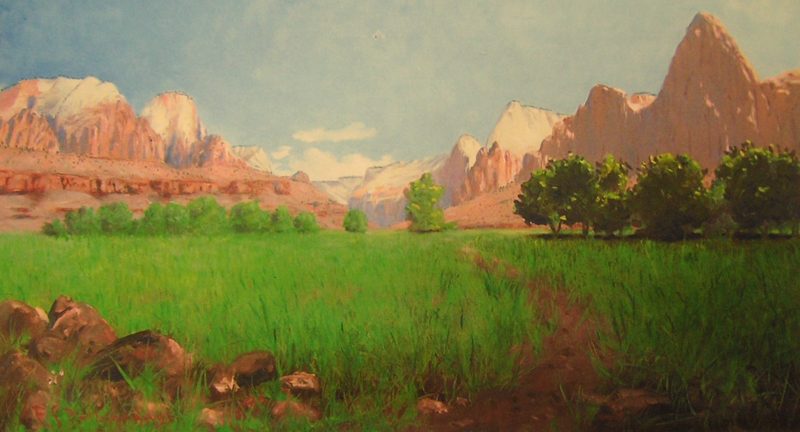
- 1904 – The moment that changed everything. Dellenbaugh shares his painting at the St. Louis World’s Fair and wrote about the canyon in Scribner’s Magazine, describing it as having “almost nothing to compare to it.” People started asking, “Where is this place?” How do we get there?
- 1908 – Federal survey teams visit
- 1909 – President William Howard Taft designated roughly 16,000 acres as Mukuntuweap National Monument.
- 1918 – The monument expanded and was renamed Zion National Monument
- 1919 – Designated Zion National Park: Utah’s very first!
- 1956 – Kolob Canyons is added to Zion National Park.
Every time someone got a good look at the park, they decided it was a place worth protecting. That instinct lives on today.
Getting to Zion National Park
Protecting Zion was one challenge. Actually reaching it was another.
The first road into the canyon opened in 1917, but for most travelers, getting here still meant a serious commitment. That changed in 1923 when the Union Pacific Railroad completed a spur line to Cedar City. Visitors would arrive by train, then board long open-top buses for the ride into the canyon.
The railroad called it “The Grand Circle,” a sweeping tour connecting Zion, Bryce Canyon, the North Rim of the Grand Canyon, and more.
To keep visitors comfortable once they arrived, the Utah Parks Company, a Union Pacific subsidiary, completed Zion Lodge in May 1925.
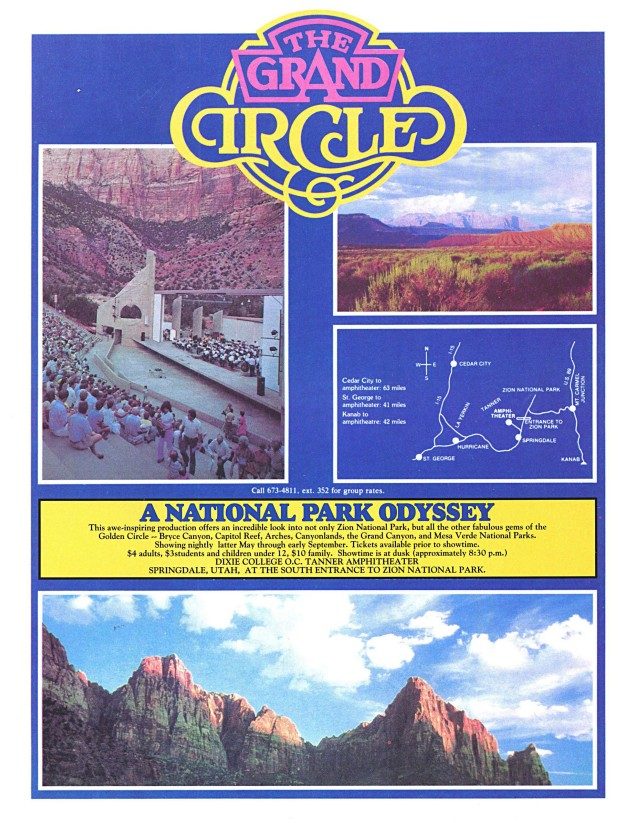
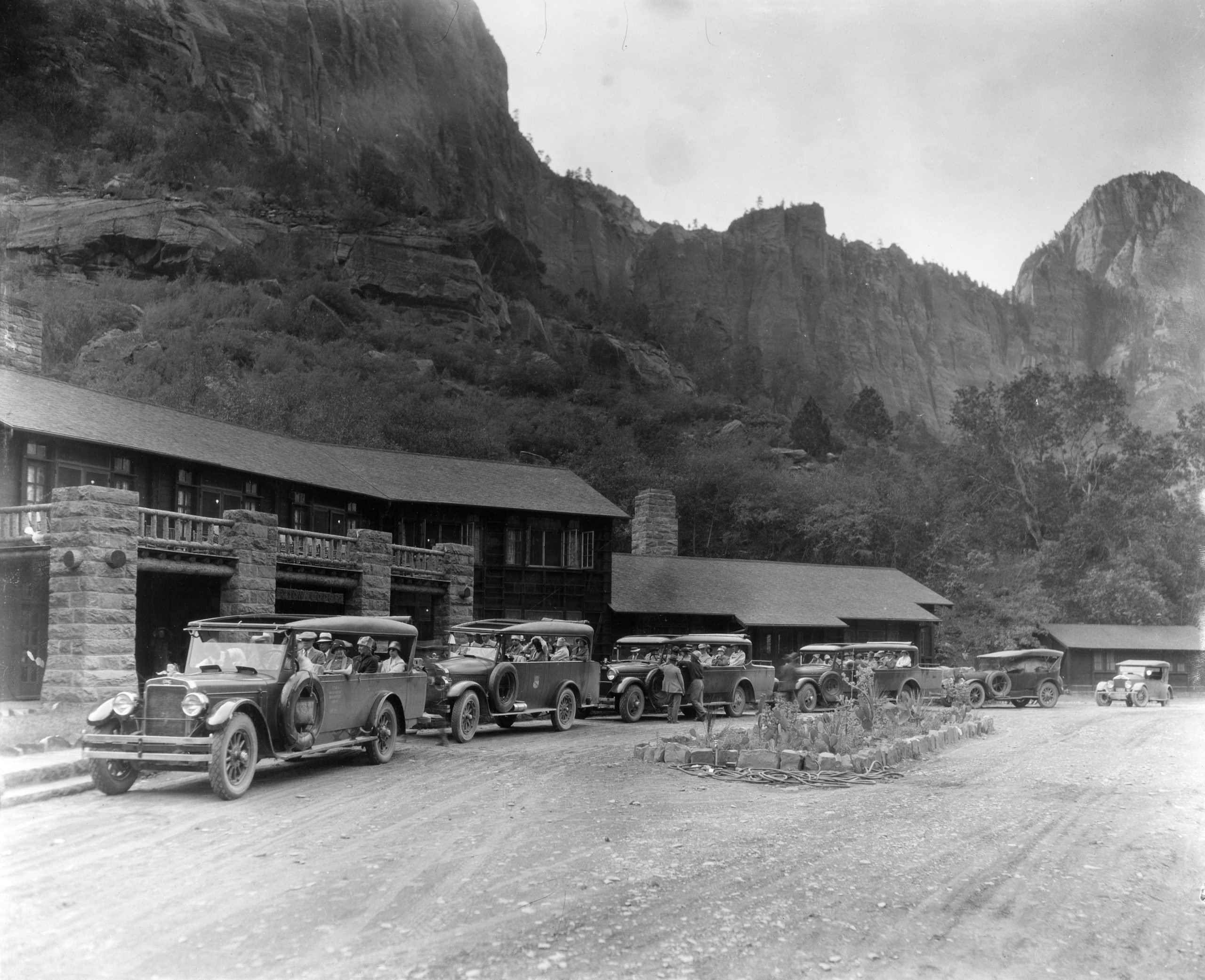
Imagine seeing the canyon’s cliffs for the first time from one of those buses, after hours of crossing open desert with dust blowing through the cabin, and then those sandstone walls suddenly appearing on the horizon like something invented by a fantasy author.
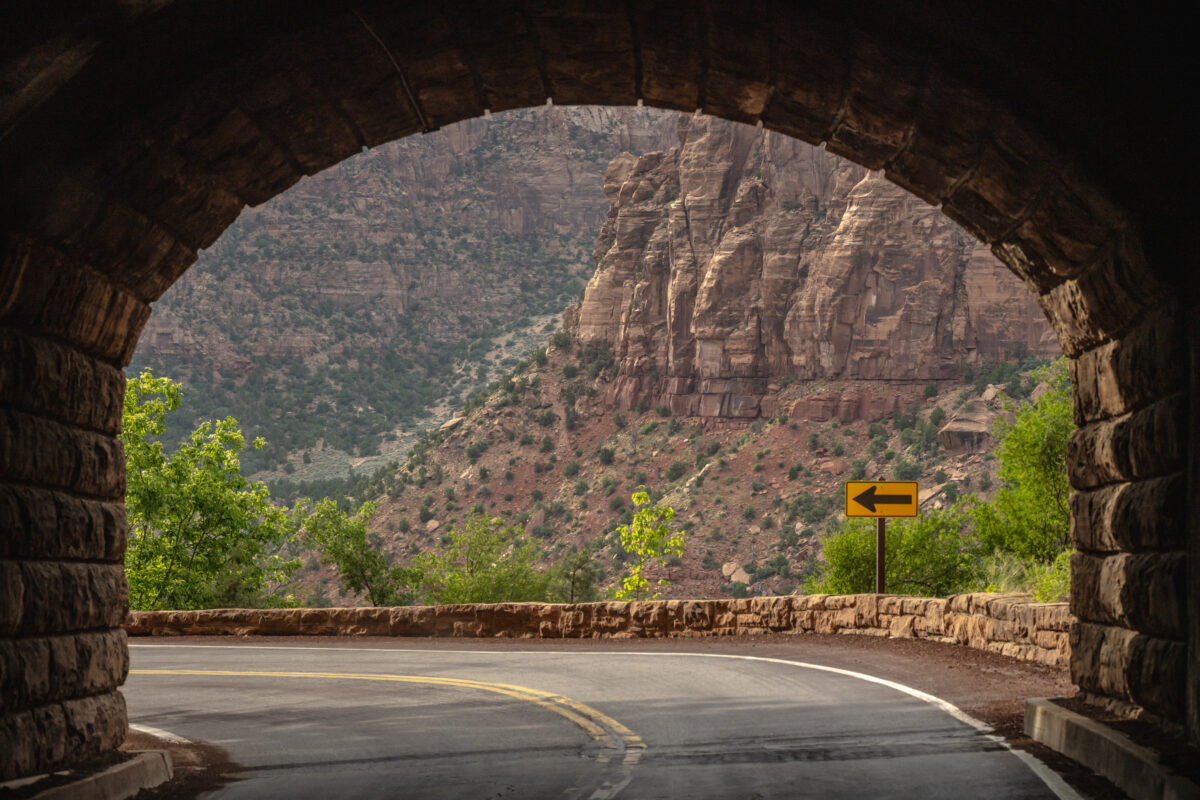
But the most ambitious project of the era was the Zion-Mount Carmel Tunnel. Beginning in 1927, workers blasted 1.1 miles directly through solid Navajo sandstone to connect Zion Canyon with the park’s eastern side and the town of Mt. Carmel. They carved gallery windows into the rock face along the way, openings that today frame dramatic views straight down into the canyon below.

The tunnel is still here. Driving through it, you get the feeling the mountain swallowed you whole and isn’t entirely sure it wants to let you out. Then you break out of the dark to the light of an incredible panoramic vista.
How Zion Got Its Name
In 1863, Mormon pioneer Isaac Behunin built a small log cabin near the canyon floor close to where Zion Lodge stands today.
It’s difficult to imagine what that must have felt like. No paved roads. No crowds. No visitor center. Just a one-room cabin beneath sandstone walls rising more than 2,000 feet overhead. In remarking about his homestead, Behunin said:
“These are the Temples of God, built without the use of human hands. A man can worship God among these great cathedrals as well as in any man-made church. This is Zion.“
Isaac Behunin
The name stuck. A handful of settlers eventually joined him, farming the narrow valley floor and waking up every morning to walls of rock that made their whole operation look like a matchbox village.
A Canyon Older Than the United States
When the country chose to protect this canyon, it made a quiet but important decision: some things are worth more than what you can get out of them. That decision has held for over a century.
But wild places don’t stay wild on their own.
Zion Forever Project, the official nonprofit partner of Zion National Park, works year-round to support conservation, trail restoration, education, and habitat protection throughout the park.
You can help by attending Red Rock Blue Sky, a benefit concert at the O.C. Tanner Amphitheater in Springdale featuring musician Luke Grimes, of Yellowstone and The Marshalls fame. One night under that famous canyon sky, raising funds so this place can stay exactly what it has always been. Get details and tickets at zionpark.org.

The Virgin River started carving this place long before the founding fathers, a flag, or a name for this part of the world in any European language. Unaware of humanity, it simply kept moving, slowly creating unspeakable beauty. With the right care, it will be here long after all of us.
