Best Times To Visit Zion National Park
Zion offers distinctive beauty year-round, so there isn’t a single best month to visit. The real question to answer is what type of experience do you want to have?
Each season brings its own rewards. Spring fills the canyon with vibrant colors and comfortable temperatures. Summer is ideal for camping, stargazing, and enjoying nearby reservoirs. Fall combines pleasant weather with fewer crowds, making it a favorite for hiking, biking, and sightseeing. Winter reveals a quieter side of Zion, with crisp air, occasional snow-dusted cliffs, and opportunities to explore popular trails with fewer people.
Zion National Park Attendance
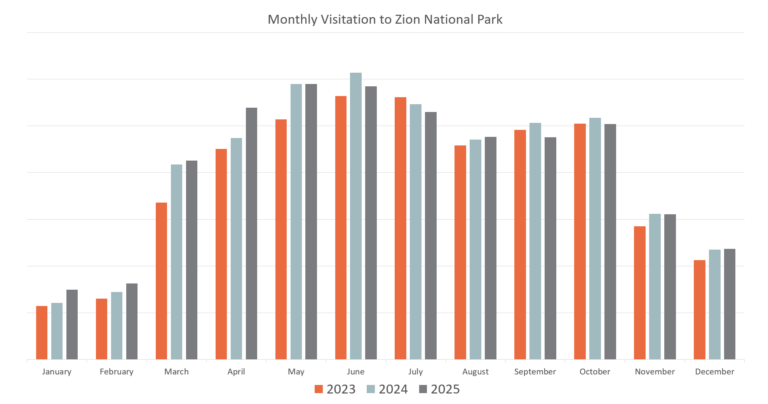
The quietest times in the park occur from November through February, while the busiest times are from May through July. Memorial Day, Independence Day, Labor Day, and any park-sponsored “free” days also experience the higher than average visitation.
If your vacation schedule is flexible, plan to visit midweek, outside of holiday weekends, or between November and February. Visiting during off-peak days or months offers you solitude to experience the sheer grandeur of the park. Whether you prefer the solitude of the off-season or the energy of peak season, there are distinct ways to experience the park fully
-
The Seasons in Zion National Park
Zion in November is nothing like Zion in July. Both are worth your time. Choose based on what you’re seeking: peace, energy, or something in between.
Spring
March through May
Daytime highs: 55°F–84°F (13°C–29°C) | Nights: 32°F–50°F (0°C–10°C)
The canyon comes back to life in spring. Snowmelt sends temporary waterfalls cascading down the canyon walls at Emerald Pools and Weeping Rock. Indian Paintbrush, globe mallow, and desert marigolds blanket the canyon floor. March and April offer some of the best hiking of the warm season, and if you’re lucky, you just might spy a newborn bighorn sheep or mule deer.

-
Summer
June through August
Daytime highs: 95°F–105°F+ (35°C–40°C+) | Nights: 65°F–75°F (18°C–24°C)
Summer is when Zion is on full display. With more than 14 hours of daylight, you have the most flexible hiking window of the year. Sunrise on Angels Landing and Canyon Overlook delivers the canyon in shades of purple, gold, and red before the crowds arrive. Kolob Canyons, in the northwest corner of the park, runs 10°F (6°C) cooler than the main canyon, allows private vehicles year-round, and offers incredible scenery with a fraction of the main canyon’s foot traffic.

-
Fall
September through November
Daytime highs: 50°F–79°F (10°C–26°C) | Nights: 35°F–50°F (2°C–10°C)
Golden cottonwoods, crimson maples, and amber aspens set against red rock walls; color peaks in the main canyon from late October into November. Ideal hiking temperatures across the full season — cool enough for long days on the trail and warm enough to want to be outside. As temperatures cool, wildlife surges at lower elevations: bighorn sheep, mule deer, wild turkeys, and ringtail cats.

-
Winter
December through February
Daytime highs: 45°F–55°F (7°C–13°C) | Nights: 20°F–32°F (-7°C–0°C)
This is Zion’s most underrated season. Snow on the canyon walls is not guaranteed, but when it falls, the red rock dusted in white is one of the most striking landscapes in the national park system. Angels Landing permit lottery odds improve significantly; winter hikers often share the summit with just a handful of people. The canyon is open, the pace is slow, and the park rewards visitors who show up for it

What’s the most affordable time to visit Zion National Park?
Visit between December and February and you’ll find fewer crowds, easier parking, and better light for photography. Yes, park entrance and camping fees stay the same year-round. But the shuttles run free and lodging prices in the surrounding towns drop significantly.
Not only do you save money, but you trade crowds for solitude, and that might be a better deal.