Beyond the Pavement: Zion National Park’s Free All-Terrain Wheelchair
Zion National Park now lends a free all-terrain wheelchair. Reach Weeping Rock, Emerald Pools, and Scout Lookout.

A traveler on the Wheelchair Travel Notes blog wrote that after the Pa’rus Trail and the Riverside Walk, “there are really not many other options left to you as a wheelie.” Other wheelchair visitors said much the same; most agreed that Zion National Park is great, but better suited to people who don’t use a wheelchair.
That story is changing.
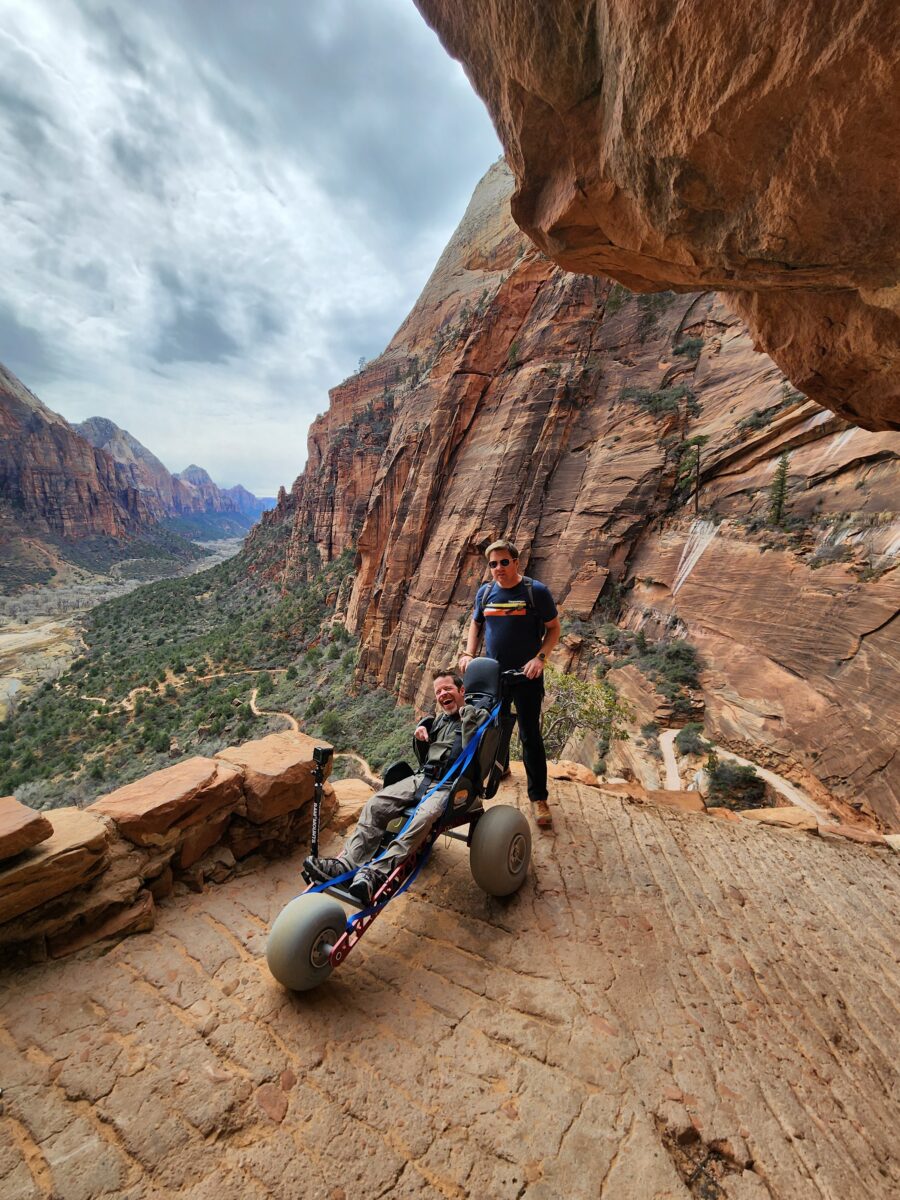
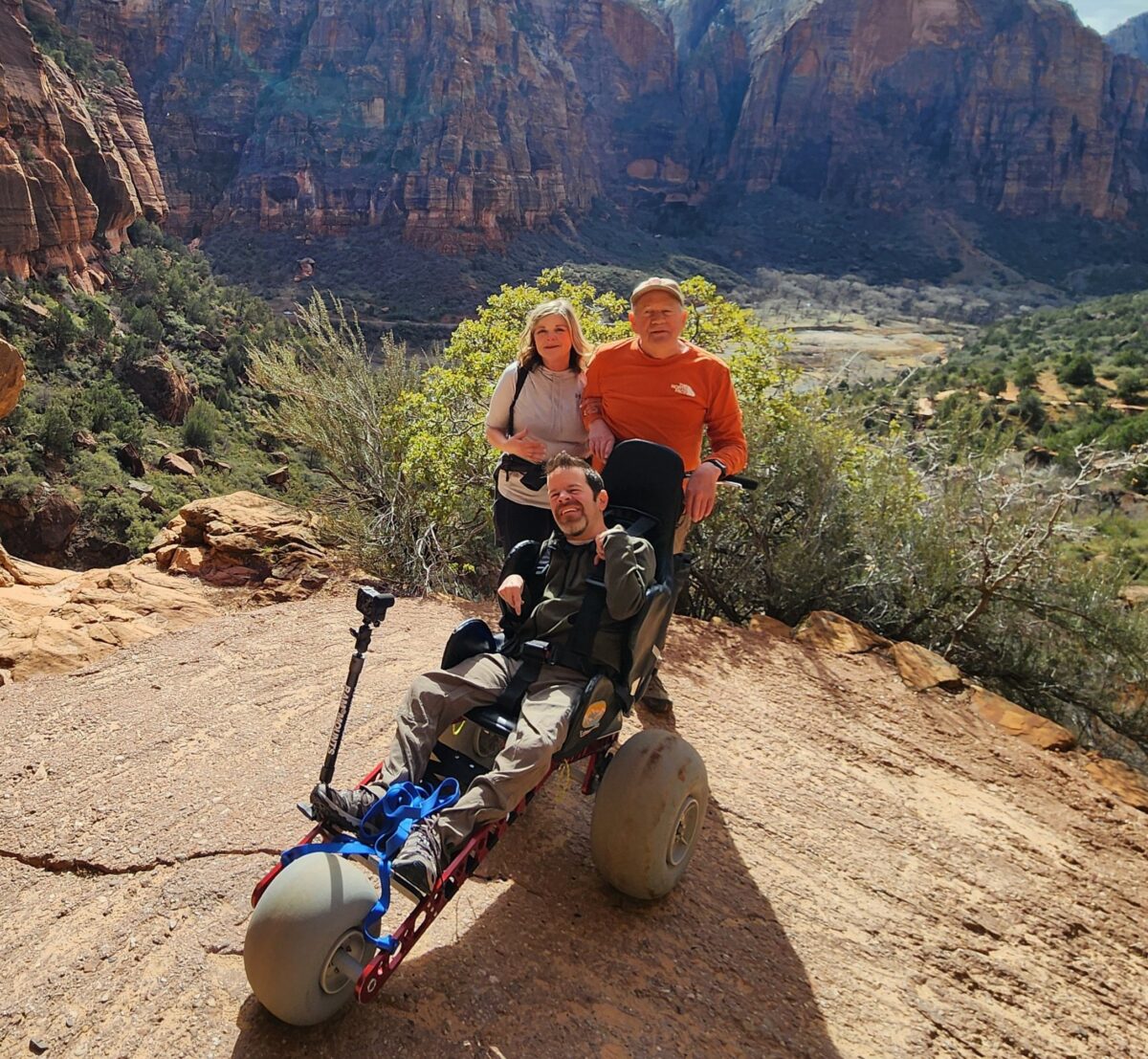
In August 2026, the park began lending an Extreme Motus All Terrain Wheelchair for free. Routes previously inaccessible to wheelchair users are now an option. They can sit beneath the dripping alcove at Weeping Rock, feel the cool spray of the falls at Lower Emerald Pools, and ride up Walter’s Wiggles, the 21 switchbacks to Scout Lookout.
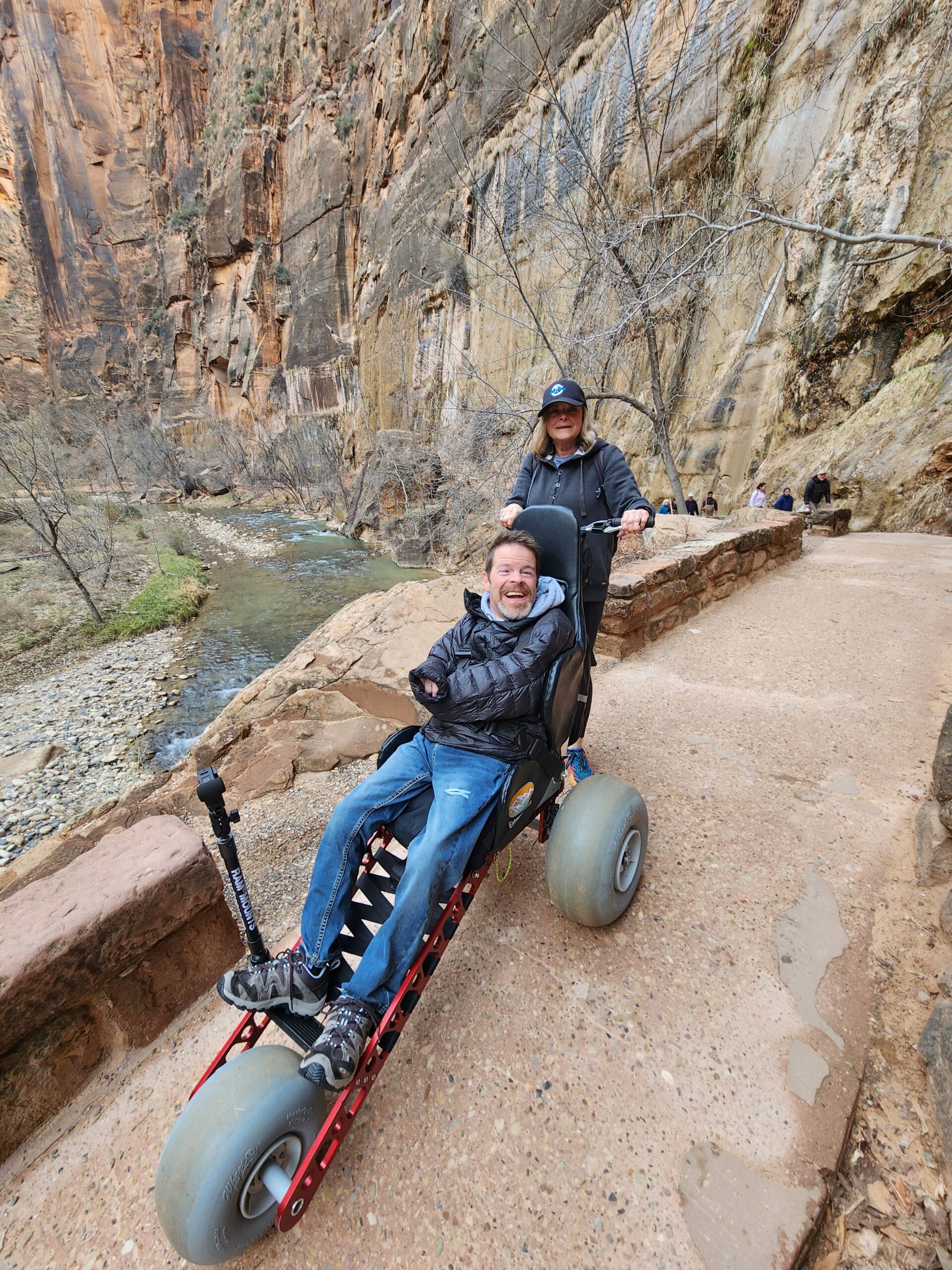
no motor, no problem
Built for two
Every foot the all-terrain chair travels, a partner pushes. The chair sits on three large, soft wheels that roll over rock, roots, and sand.
This is how the workload breaks down on a trail:
- The rider sets the pace and calls the stops. The chair is built to hold still on a slope, so ask for a stop wherever the view is worth it.
- The person pushing reads the ground. Grade, side slope, and sand determine how physically demanding each stretch will be.
- Bring a second assistant on any climb. Trading off on the handles turns a hard push into a steady one.
The payoff for an all-terrain wheelchair hike goes both ways. Each view is one you earn together.
Where the Chair Can Go
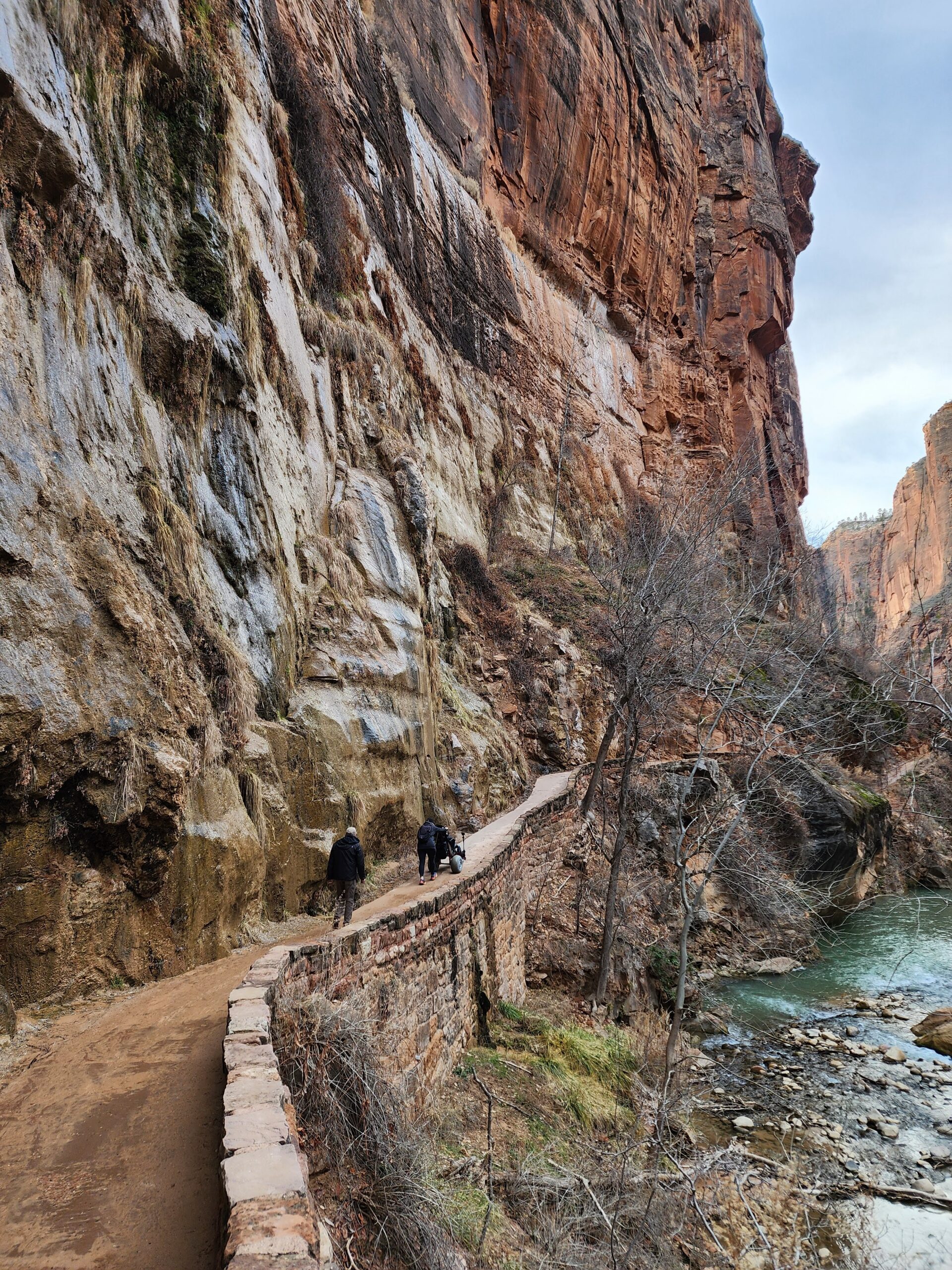
The park provides an approved list of trails for all-terrain chair use. Some approvals cover only designated portions of a trail.
Recommended Trails
-
Pa’rus Trail
-
Riverside Walk Trail
-
Weeping Rock Trail
-
Lower Emerald Pools
Additional Trails
-
Middle Emerald Pools Trail
-
West Rim Trail
-
Grotto Trail
-
Coalpits Wash Trail
-
Chinle Trail
-
Taylor Creek Trail
-
Observation Point Trail
-
East Rim Trail
-
Cable Mountain
-
Deertrap Mountain Trail
-
Wildcat Trail to Hop Valley
-
Hop Valley Trail
Travel tip
Several approved trails sit outside Zion Canyon. Kolob Canyons and Kolob Terrace are separate drives. The chair must be back at the Zion Canyon Visitor Center by closing. Remember to account for the drive both ways when you pick a trail. Confirm your route with the ranger when you check out the chair for the day.
Reading the Grades
Trail grade will shape your day more than any other detail. In 2025, the park measured grade, side slope, and surface on its most popular trails and posted the results on its trail access page. The numbers read like a surveyor’s notes, but for anyone pushing the all-terrain wheelchair, they’re useful data for your day in the park.
Here’s a good way to understand the physical demands of a trail:
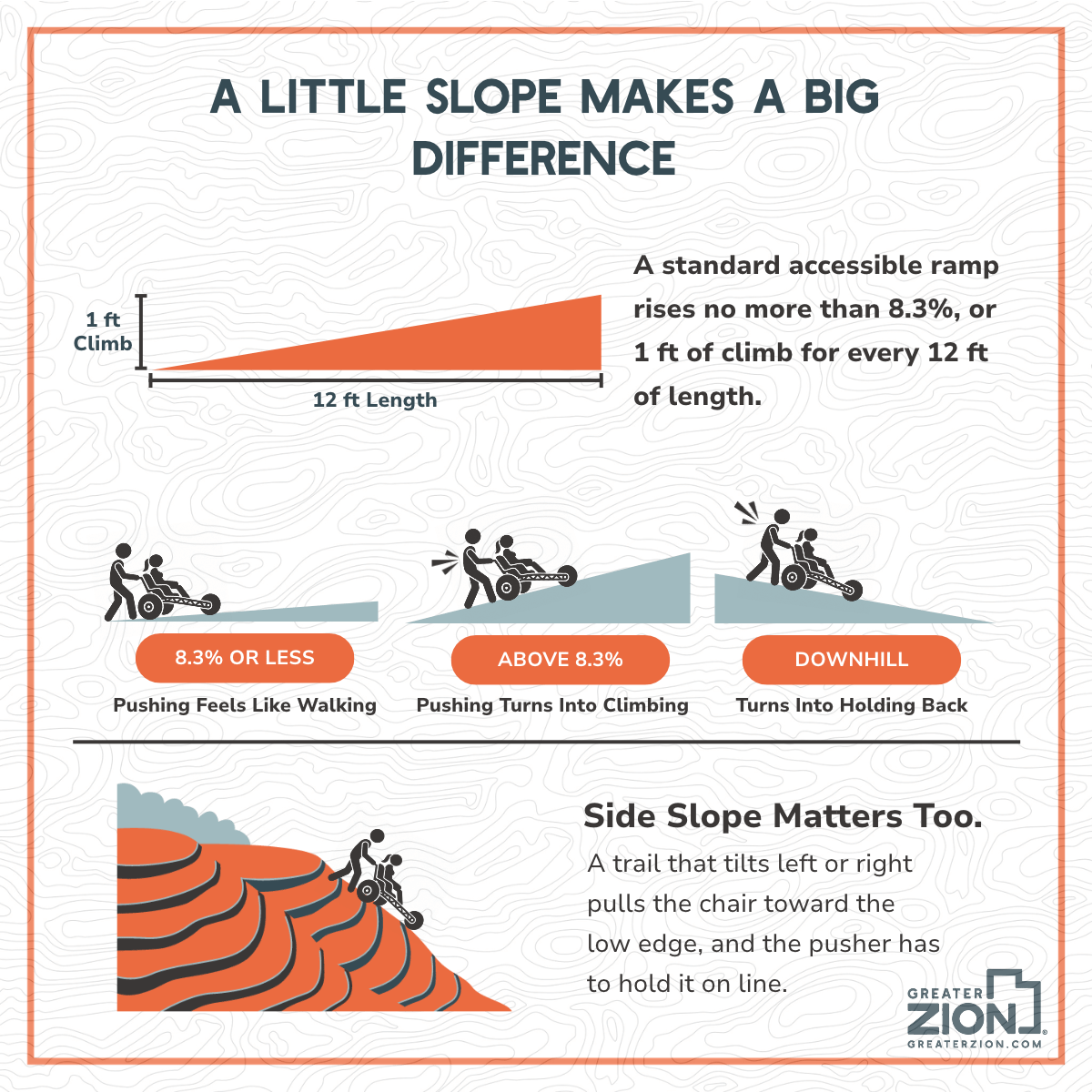
A standard accessible ramp rises no more than 8.3%, or 1 foot of climb for every 12 feet of length. Below that, pushing feels like walking. Above it, pushing turns into climbing, and on the way down, it shifts to holding back. Side slope matters, too. A trail that tilts left or right pulls the chair toward the low edge, and the pusher has to hold it on line.
Here’s how the most popular trails compare:
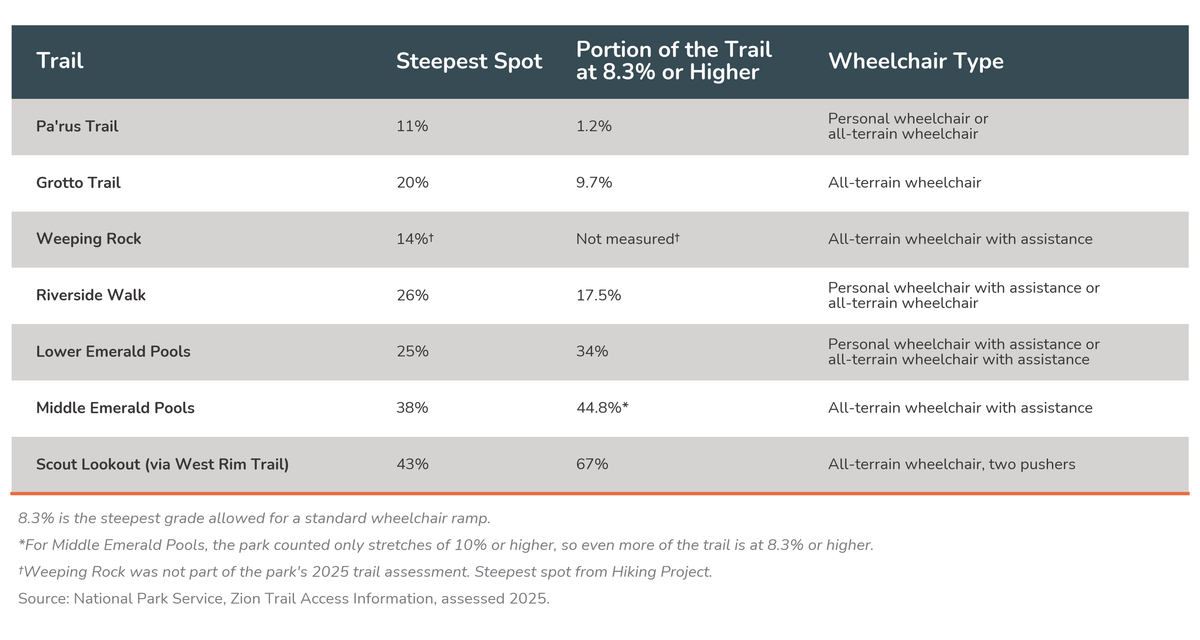
The steepest spot tells you the single hardest portion of the trail. The portion of the trail at 8.3% or higher tells you how often you’ll feel it. The Pa’rus Trail has only a few short pulls. The Lower Emerald Pools Trail is paved, but a third of it climbs harder than a ramp. Trail conditions can change, so treat these numbers as a starting point and ask a ranger about the trail you want to take.
First-come, First-served
How to Check Out the All-Terrain Wheelchair
The Extreme Motus All Terrain Wheelchair is lent for one day at a time. There is no reservation system, so arrive early and bring your full team. The park cannot store personal wheelchairs, so make sure you have room for yours in your car.
-
Start here
Go to the information desk at the Zion Canyon Visitor Center. Ask if the chair is available.
-
If it’s available
Eeach user will sign the waiver. One of you shows an ID and proof of insurance.
-
Train Together
A ranger shows you both how the chair works and walks you both through a features checklist.
-
get the Accessibility Pass
The chair won’t fit on the shuttle, so the ranger gives you a pass to drive and park in designated spaces on Zion Canyon Scenic Drive during shuttle season.
-
End of the day
Return the chair the same day, before the visitor center closes. Check the park’s operating hours when you plan your route.
In Your Wheelchair
If the all-terrain wheelchair is checked out, or you’d rather use your own, portions of Zion Canyon are still accessible.
The Shuttle
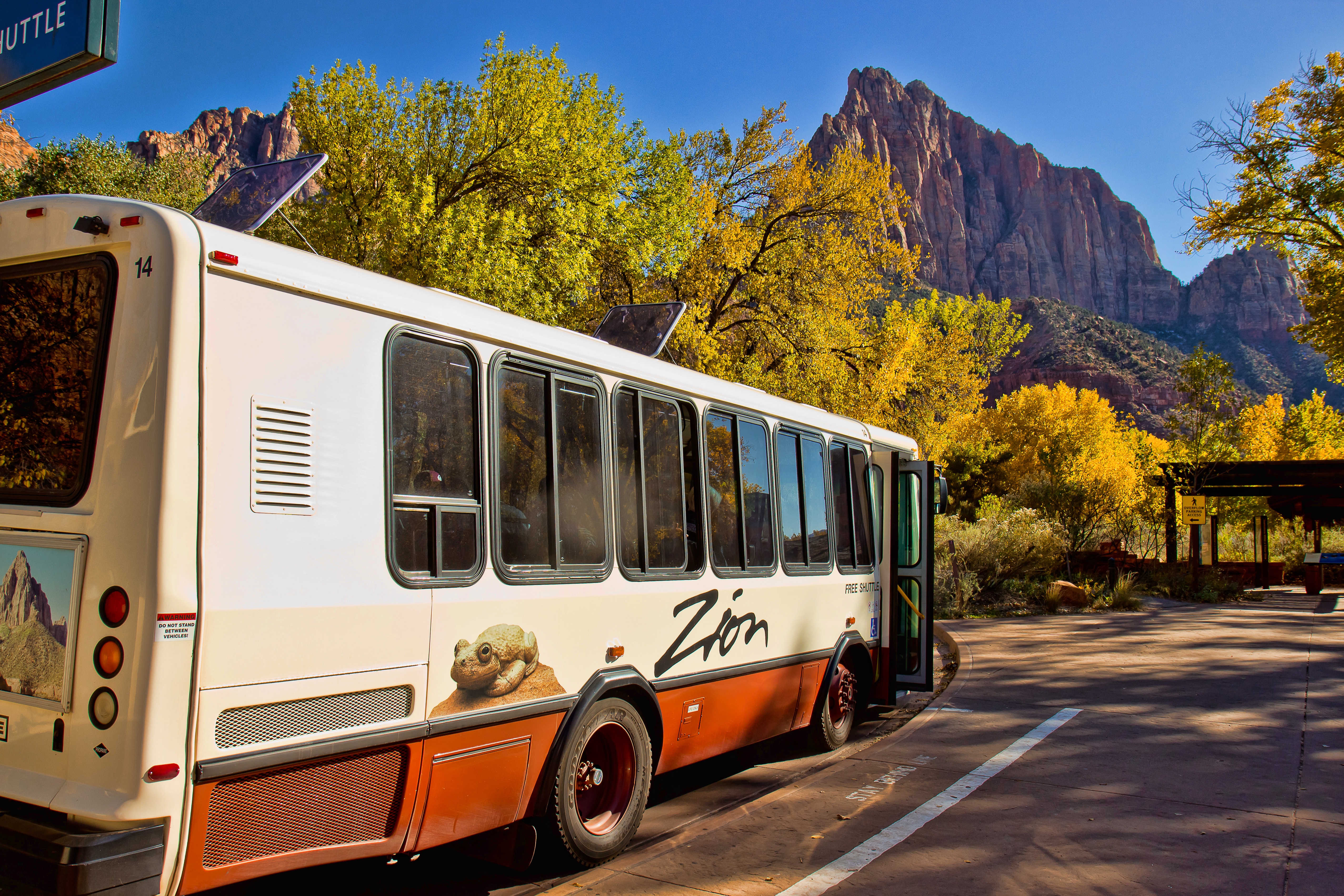
Every Zion Canyon shuttle is wheelchair accessible, with a lift that lowers to the curb. The lift holds 600 pounds for rider and chair combined, and it fits chairs up to 45 inches long and 25 inches wide. If your chair is larger, talk to a ranger at the visitor center about other ways into the canyon.
Learn more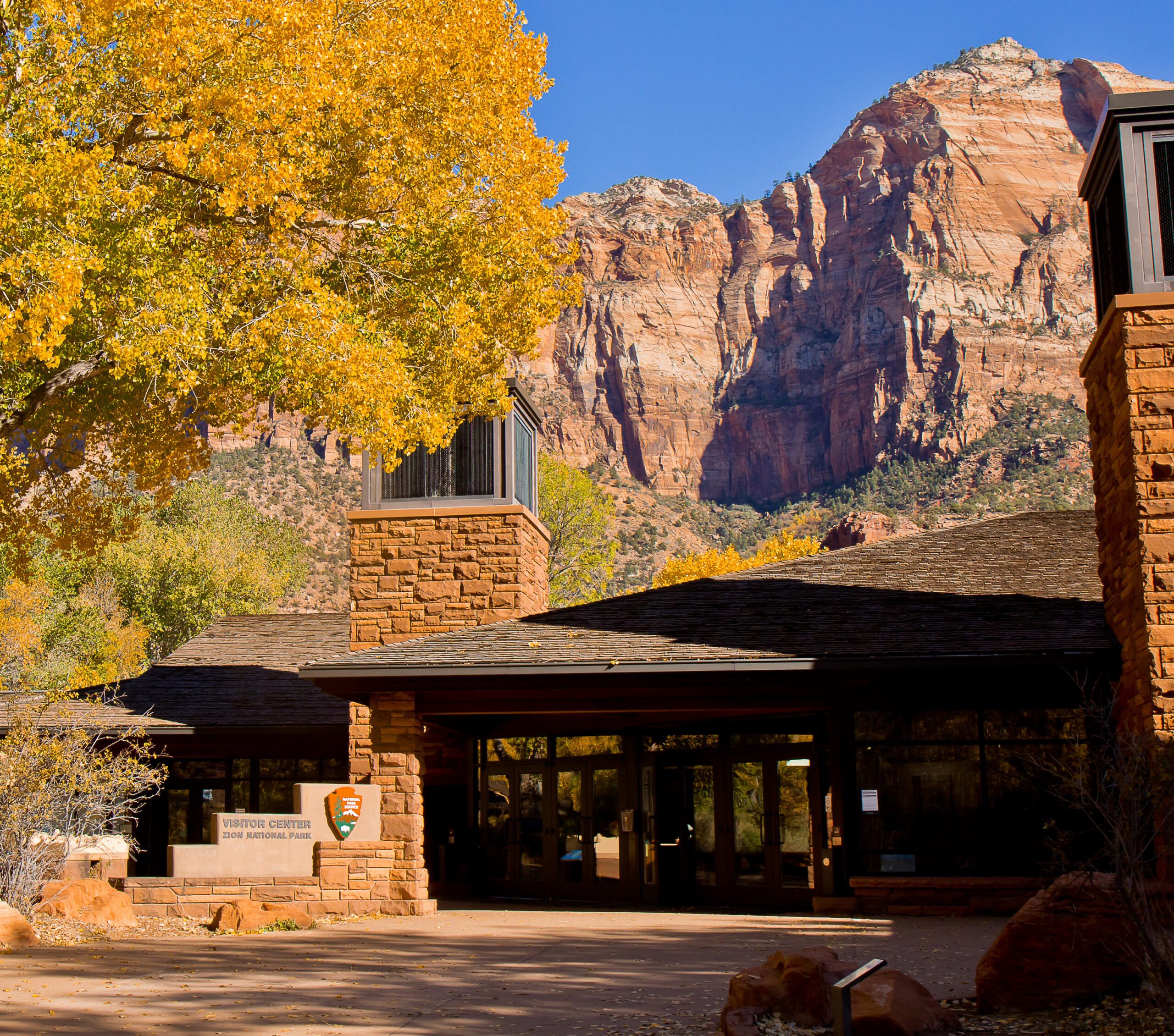
Zion Canyon Visitor Center and Human History Museum
The Zion Canyon Visitor Center has reserved parking, a ramp to the building, and a flat, paved plaza with exhibits and water filling stations. The Zion Human History Museum is accessible, too.
Learn more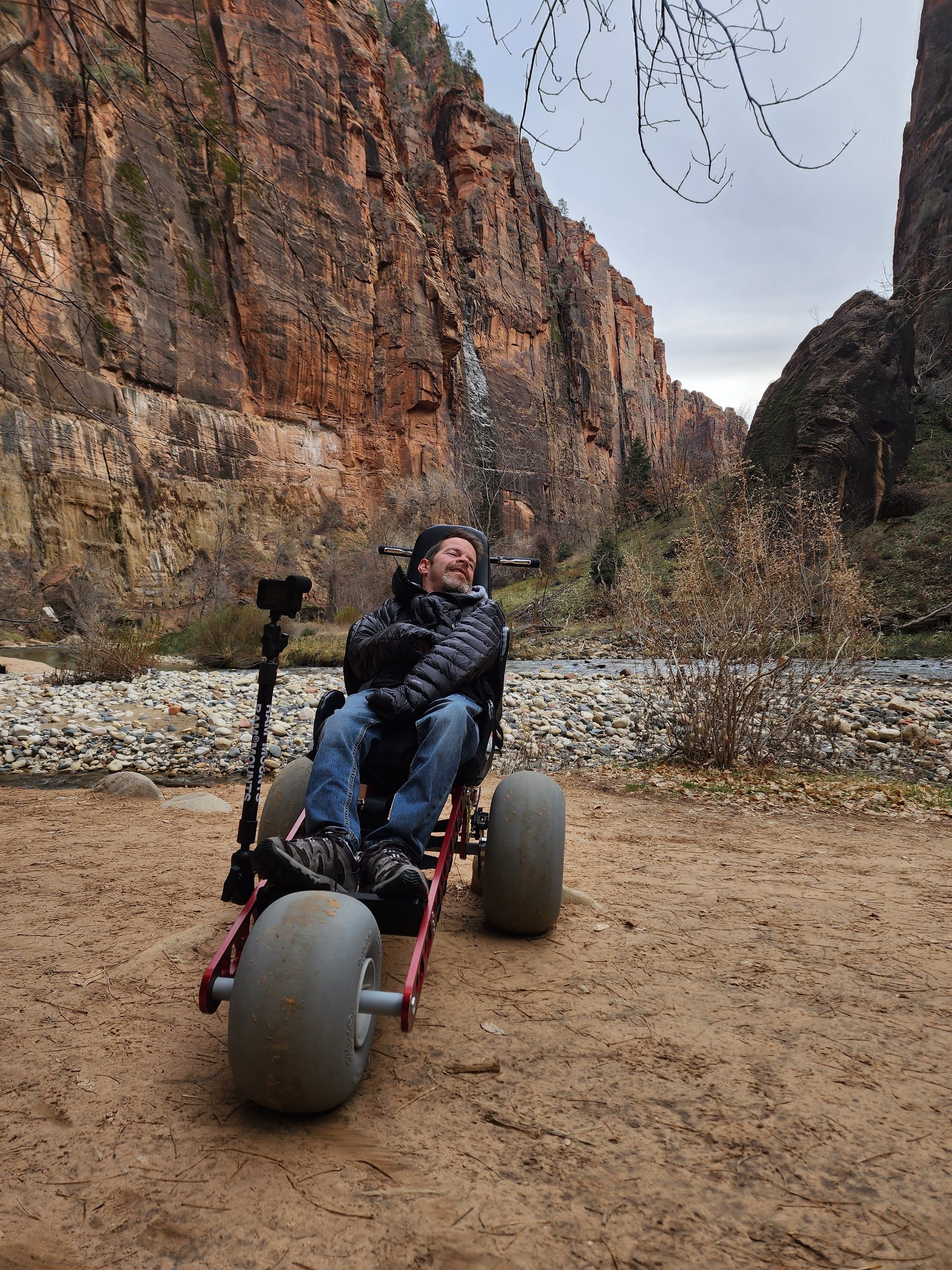
Riverside Walk
Ride the shuttle to the Temple of Sinawava and follow the river toward the Narrows. The first .4 miles roll well. Past that, several steep slopes call for a partner’s help.
Learn more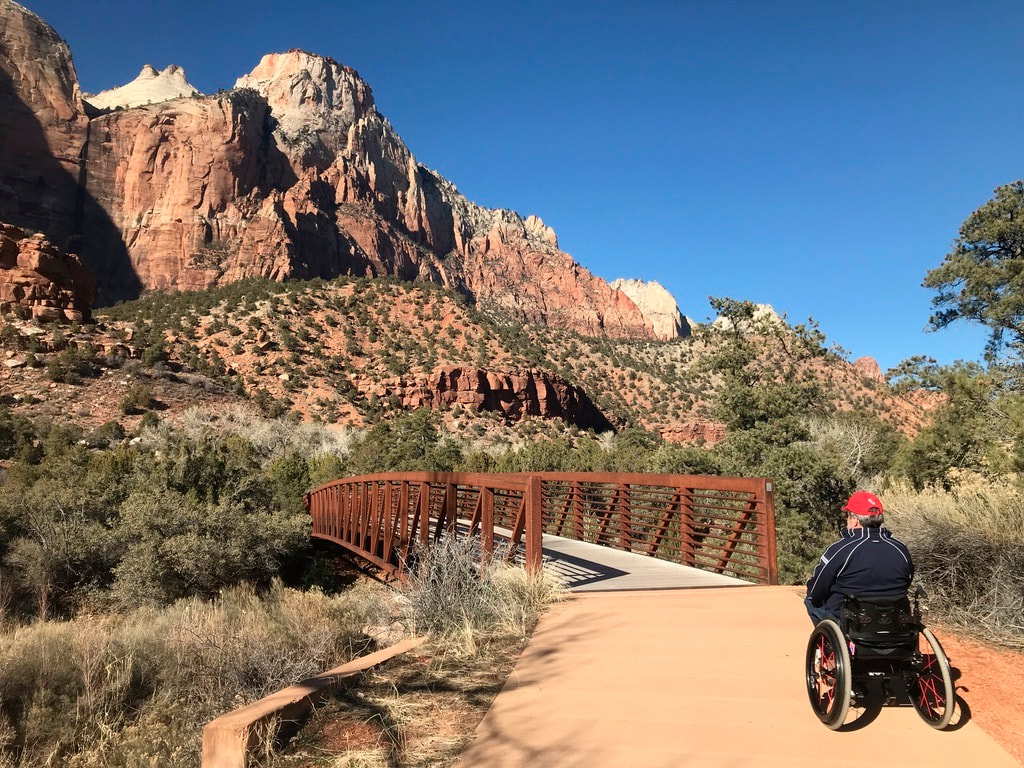
Pa’rus Trail
The park calls the Pa’rus its most accessible trail. It runs 1.6 miles one way beside the Virgin River, starting at the visitor center plaza. No shuttle needed. Bikes and leashed pets share the path, so keep right.
Learn moreAccessible Restrooms in Zion Canyon
- Zion Canyon Visitor Center (Shuttle Stop 1)
- Zion Human History Museum (Shuttle Stop 2)
- Zion Nature Center (near South Campground)
- Zion Lodge (Shuttle Stop 5)
- The Grotto (Shuttle Stop 6)
- Weeping Rock (Shuttle Stop 7, vault toilet)
- Temple of Sinawava (Shuttle Stop 9, portable toilet)
Check the park’s accessibility information for Kolob Terrace and Kolob Canyons restroom options.
Plan Your Visit
The park’s story for wheelchair users has shifted. Once you’ve accomplished the Pa’rus and Riverside Walk, accept the challenge of Weeping Rock, Lower Emerald Pools, or Scout Lookout. All are within reach with the Extreme Motus All Terrain Wheelchair.
Extend your stay
explore beyond the park
Roll on paved trails beside the Virgin River under cottonwood shade. After lunch in downtown St. George, loop the smooth half-mile path at the Red Hills Desert Garden. Then follow the Whiptail Trail through Snow Canyon, and end the day under star-filled skies.
FAQs
Is Zion National Park wheelchair accessible?
The visitor centers, Zion Human History Museum, shuttle buses, restrooms, picnic areas, and Zion Lodge are accessible. No trail meets ADA standards by law, but the Pa’rus Trail and Riverside Walk work in a standard wheelchair with help, and the all-terrain chair opens more than a dozen others.
Can I reserve the all-terrain wheelchair?
No. The park has one chair, lent on a first-come, first-served basis, for a single day. Come early to the Zion Canyon Visitor Center information desk.
Do I need someone to push it?
Yes. The rider can’t propel the chair, and it has no motor. Your assistant signs the waiver and trains with you before you hit the trail.
Can I drive into Zion Canyon if I can’t ride the shuttle?
If you check out the all-terrain chair, the ranger gives you a pass to drive and park on the scenic drive. If your own chair is over the shuttle lift’s limits, talk to a ranger at the visitor center about your options.
Is there a free pass for visitors with disabilities?
Yes. U.S. citizens and permanent residents with a permanent disability qualify for the free, lifetime Access Pass, which covers entrance fees at Zion and other national parks.
